REET 2026 Preparation Strategy for Beginners
Table of Contents
Understanding the REET Beast
The Rajasthan Eligibility Examination for Teachers (REET) is the ultimate gateway to becoming a 3rd Grade Teacher in Rajasthan. The competition is fierce, with over 15 lakh candidates appearing for roughly 30,000 to 40,000 posts. Without a highly structured strategy, even brilliant students fail. Here is your roadmap.
1. Master the RBSE Textbooks
Do not start your preparation with thick 800-page guidebooks. Your first step should be reading the official Rajasthan Board of Secondary Education (RBSE) textbooks from Class 6 to Class 10 (and Class 11-12 for specific topics). For Level 2 (Subject specific), the majority of the paper is directly lifted, line-by-line, from these textbooks.
Make short, one-liner notes from these books. Once your foundation is strong, then move on to advanced guidebooks for MCQs.
2. The Weight of Psychology (CDP)
Child Development and Pedagogy (CDP) is the deciding factor in REET. It carries 30 direct marks, but its concepts heavily influence how you answer the pedagogy sections of the other subjects (which carry another 40-50 marks collectively).
Understand concepts deeply. Don't just memorize that Piaget gave 4 stages; understand what 'Object Permanence' actually looks like in a classroom. Standard books like Vandana Jadon or Shikwal are highly recommended.
3. Smart Language Selection
Choose your Language 1 and Language 2 carefully based on your actual grammatical proficiency, not what your friends are choosing. Usually, candidates choose Hindi as L1 (as it focuses more on prose and poetry comprehension) and Sanskrit or English as L2 (which focuses heavily on grammar and phonetics).
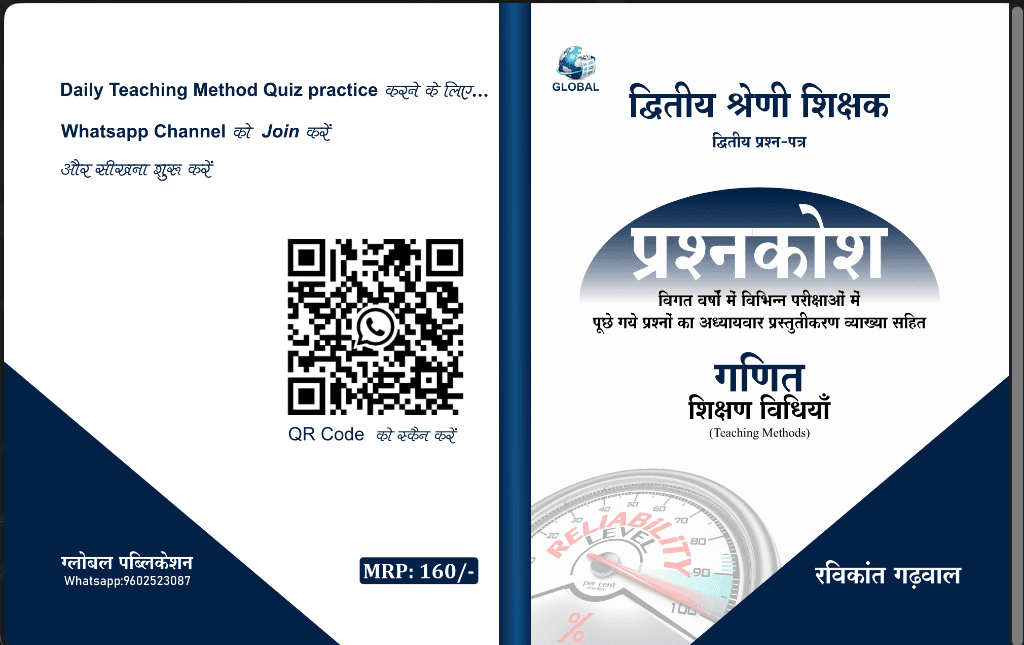
Master the teaching methods of these languages, as they act as easy scoring areas.
4. The Power of Mock Tests
Once you complete 50% of the syllabus, start giving full-length 150-question mock tests. Time management is crucial in REET. You have 150 minutes for 150 questions. Analyze your mistakes after every mock test. If you are scoring 110 in mocks, you will likely score around 100 in the real exam due to pressure.
Mistakes that Cause Failure
- Ignoring Teaching Methods: Candidates study core Math or Science deeply but ignore the 10 marks allotted to teaching methods. These are free marks!
- Changing Books at the Last Minute: Stick to your chosen books. Revising one book 5 times is better than reading 5 books once.
- Panic During OMR Filling: Fill your OMR sheet simultaneously or after every section. Never leave it for the last 15 minutes.
6-Month Preparation Checklist
- ✓ Months 1-2: Complete RBSE textbooks (Class 6-10)
- ✓ Month 3: Deep dive into CDP and Languages
- ✓ Month 4: Complete Teaching Methods (Pedagogy) for all subjects
- ✓ Month 5: Solve chapter-wise PYQs for every topic
- ✓ Month 6: Full-length Mock Tests and rapid revision of short notes
Frequently Asked Questions
Historically, the pre-eligibility exam does not have negative marking, but the main recruitment exam does. Always read the latest notification.
General candidates must score 60% (90 out of 150 marks) to clear the eligibility test.
Self-study is sufficient if you are disciplined. Coaching is only required if your core concepts (like Math or English Grammar) are very weak.
Yes, appearing candidates can take the exam, provided their degree results are declared before the final document verification.
Level 1 is for teaching classes 1 to 5 (BSTC/D.El.Ed required), and Level 2 is for classes 6 to 8 (B.Ed required).
For REET, RBSE books are prioritized as the exam is conducted by the Rajasthan board.
You can find a curated list of top-tier REET guidebooks and PYQ sets in our Educational Books section.
In the new pattern, Rajasthan GK holds massive weightage in the main recruitment exam, so it must be studied thoroughly from Day 1.
Conclusion
REET is a marathon, not a sprint. Maintain consistency, stick to the syllabus, limit your resources, and prioritize mock tests. The path to becoming a government teacher is tough, but with this strategy, success is highly probable.
Written by Global Emitra Shop Editorial Team
Our editorial team researches and publishes educational resources, government service guides, and digital service information for students and citizens across Rajasthan.